

The “Project Hockey Rink” merger between H&R REIT (TSX:HR.UN) and GO Residential (TSX:GO.U) is melting in the sunlight. Market value lost through this dopey deal has reached C$314mm (to 8/21).
This article provides additional details and comments following my prior article:

Topics:
H&R is in play. Investors could profit from termination of the GO merger or exercise of Dissent Rights.
GO is in doubt. The heavy dilution from the proposed merger raises doubt about management and invites greater scrutiny of their backgrounds.
Hofstedter Consortium members. How do they own 16% of outstanding units without filing an Early Warning Report?
Was the strategic review process manipulated to favor this outcome?
Dissent Rights. Unitholders can receive “fair value” in cash through a court process.
2 Gotham Center. Heads Tom wins. Tails GO loses.
H&R Is In Play
Another week of management spin has not improved perceptions of the deal. Some buyers of HR may be betting on upside from termination. I hoped that sharing information would contribute to conversations about potential improved outcomes for public investors and I believe those discussions are happening. Every institution involved with H&R or GO has viewed my prior article, as well as some major Canadian and international entities with no known connection. Maybe they all just want the link to the cumgirl8 video…
Based on my prior analyses of GO (Valuation and Gotlib lawsuit, and Teo connection), I knew the HR-GO deal was a disaster as soon as I saw the headline. I told subscribers that I would scale out of HR above $11. It never traded there so I have not sold any units. I left open my idea to “Buy under $10” and I’m sticking with that based on potential upside from deal termination OR exercise of dissent rights.
I estimate a Sum-of-the-parts valuation for H&R segments of $12.31/unit as of 6/30/26. Investors could apply a further conglomerate discount of 20%, or whatever number you like.
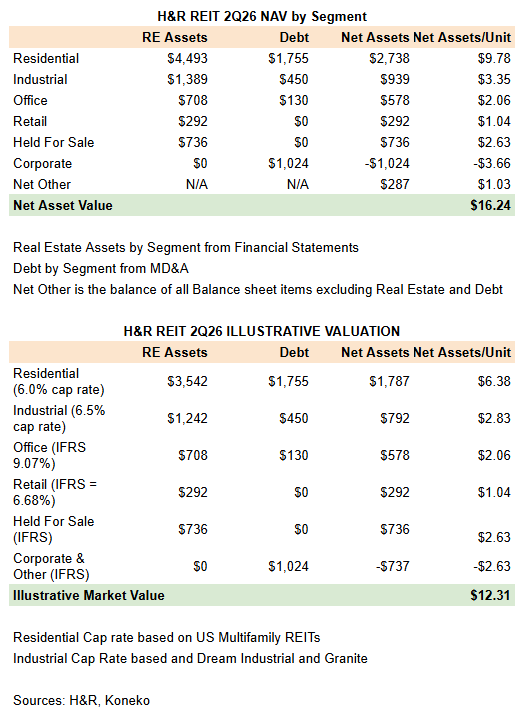
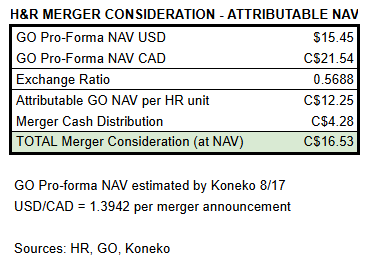
Pro-forma Lantower REIT would have an illustrative value of C$8.40 (after a $4.28 distribution) compared to GO merger consideration of C$6.77 (at 8/21 price of US$8.54). Lantower REIT assets would be 84% Residential and related retail (the current Retail “segment” could be eliminated since it is just the River Landing Shops connected to the River Landing Residences). The conglomerate discount should disappear.
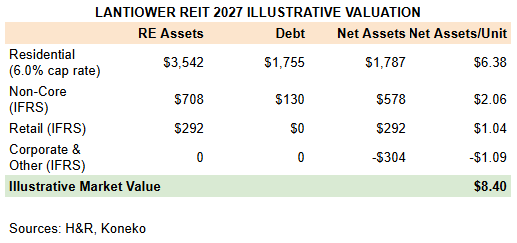
Assumes these Held for Sale assets close at their carrying value of C$736mm

Assumes the Blackstone and Crestpoint Industrial sales achieve a cap rate of 6.0% (gross proceeds of C$1,345mm)
Assumes a C$4.28/unit special distribution.
H&R agreed to a single merger termination fee of C$102mm that did not contemplate the possibility that some parts of the deal (e.g. the Industrial sales) could be completed and the others (the GO merger) terminated. I believe that GO blundered by entering into this agreement and should also be seeking termination. Blackstone and Crestpoint should be amenable to completing their portions of the deal rather than accepting termination payments. I believe the transaction structure does not envision any termination fee payable to the Hofstedter consortium. The best outcome for all parties would be a negotiated settlement as soon as possible.

If GO seeks a termination payment then HR could claim that GO breached warranties and representations made by GO in the merger agreement. For example, GO represented that it has charged correct rents, but The Copper Building lawsuit alleges rent overcharges.

If the GO merger is not completed, can Hofstedter be trusted to act in the best interest of public H&R investors?
GO Is In Doubt
Who are these guys? It’s remarkable that GO was able to come public with so little disclosure about the career experience of its principals. They’re from New York City (like Bernie Madoff, Jordan Belfort, and Donald Trump) and Orbach owns an LP interest in a basketball team. Prior to the 2022 GO Partners acquisition spree, they were not players in the NYC market for institutional quality Class A real estate. It wasn’t hard to find the story about Gotlib’s fraud lawsuit because nothing else has been written about him. Meyer Orbach was prominently featured in a 2018 NY Times article about abusive landlords (The Eviction Machine Churning Through New York City).
GO announced 4 property acquisitions earlier this year and Gotlib boasted that vendors were accepting partial consideration in GO units valued at NAV of $23.70 because “they know our portfolio is trading at a significant discount to intrinsic value” (4Q25 conference call). Since the deals were announced, three have closed with only a token total equity consideration of 5000 units and the fourth remains subject to a letter of intent, but has not closed. Evidently nobody, except maybe the trustees of H&R REIT, believes in the financial statement valuation of GO’s assets.
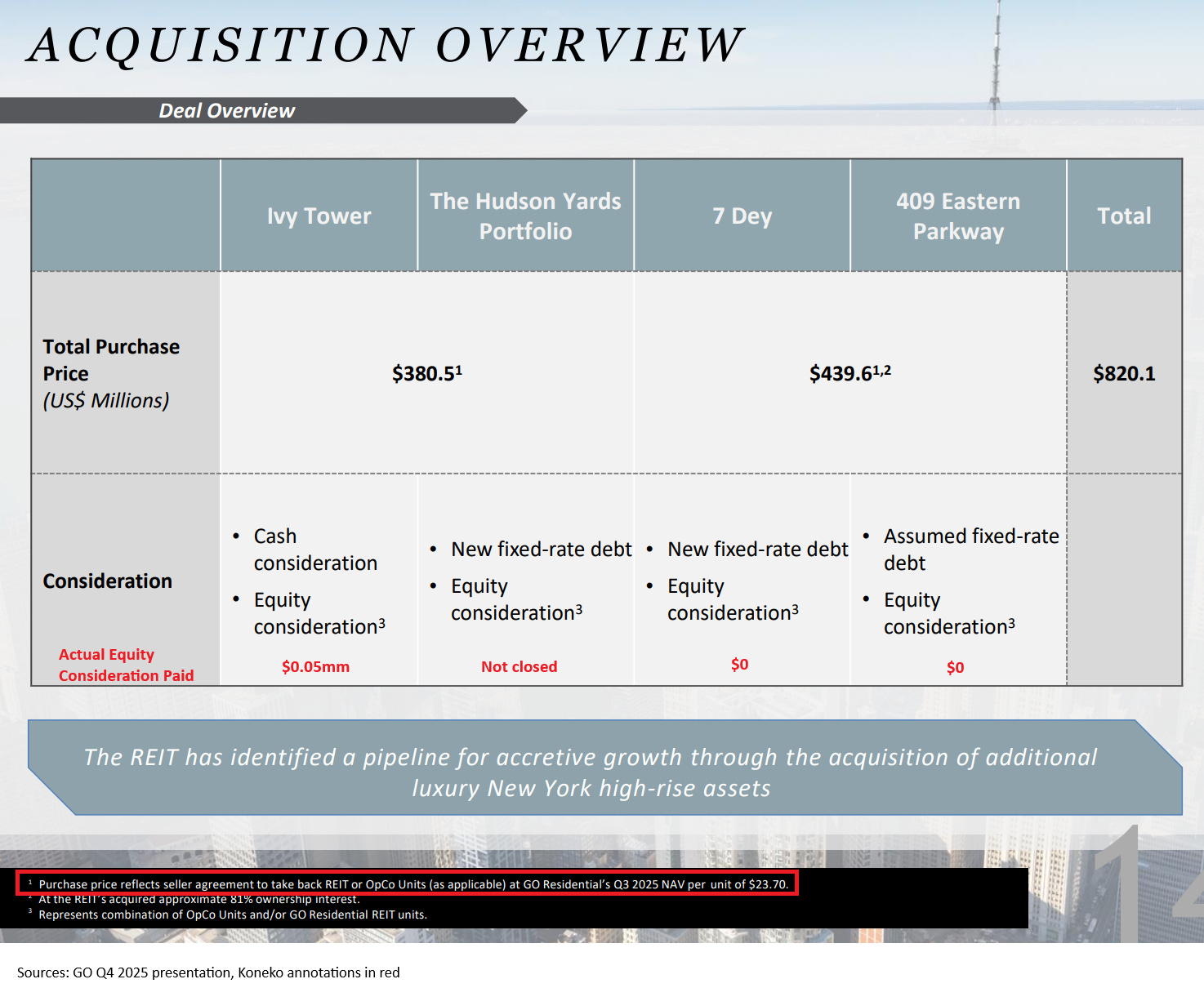
GO’s willingness to conduct two heavily dilutive share issuances in 2026 validates the concerns of skeptics and undermines the faith of anybody who believed in management. If its valuations are real then GO should be selling assets rather than equity.
One GO investor told me he wasn’t concerned about Gotlib’s fraud allegations and Teo’s convictions because as fellow unitholders, the fraudsters interests were now aligned with his. Many institutions are not willing to think that way. I believe GO units will always trade at a low valuation unless or until the fraud connections are resolved.
Hofstedter Consortium Members
Investors were surprised to learn that the Hofstedter Consortium owns 44mm units (16% of outstanding) without ever having filed an Early Warning Report.

Voting Support Agreements filed on SEDAR indirectly provide details of the composition of the consortium, plus fourteen trustees and executives who have committed to vote an additional 2.4mm units in favor of the GO merger.
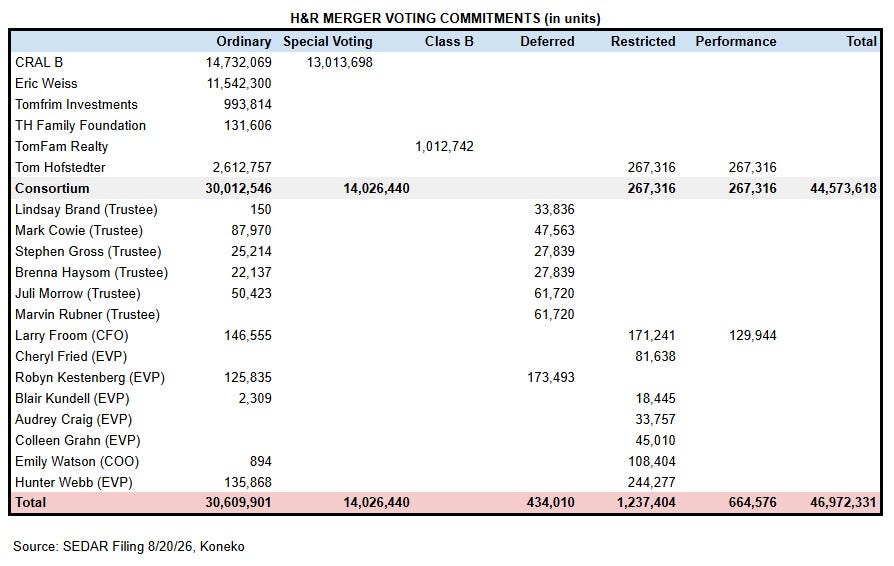
The big difference from prior disclosures was revelation of the 26.3mm Ordinary units controlled by CRAL, Eric Weiss, and Tomfrim. Adding 13.0mm Special Voting units brings their stake to 40.3mm (14.4% of all units).
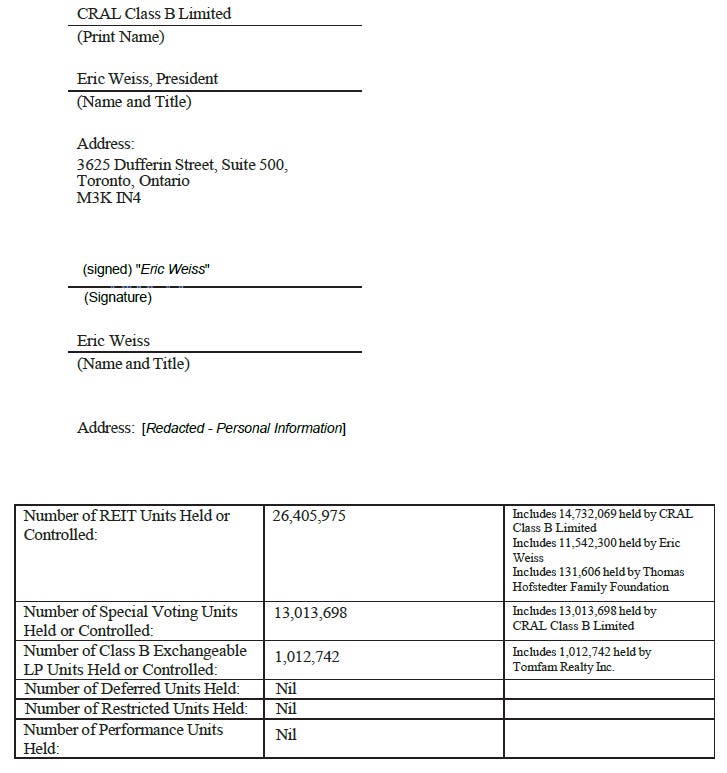
HR’s regular annual meeting circular disclosed that Tom Hofstedter “Beneficially Owned, or Controlled or Directed, Directly or Indirectly” only 3.7mm units which appears to include Thomas Hofstedter Family Foundation and TomFam, but exclude Tomfrim.
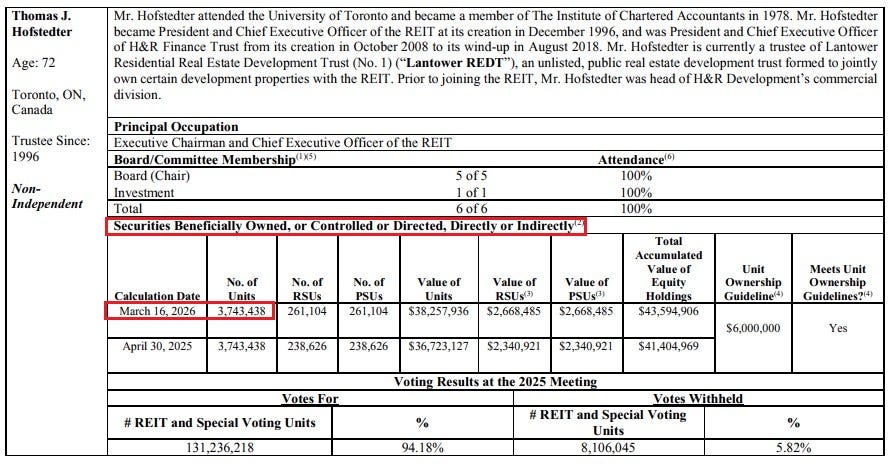
If Tom Hofstedter is a beneficiary or has direct or indirect control over units held by CRAL or Tomfrim then it looks like he under-reported his ownership. Maybe he’s taking legal advice from Alfred Teo (convicted for false ownership disclosures)? I don’t know the details of Eric Weiss’ connection with the Hofstedter family.
The Hofstedter Consortium appears to be “acting in concert”, “actively working together”, and have an “agreement, commitment, or understanding to acquire, vote, or exercise control over securities, or to effect a transaction”. See guidance on insider reporting requirements from the BC Securities Commission.
Was The Strategic Review Process Manipulated To Favor This Outcome?
HR investors would have been comfortable with a Lantower sale for cash, or equity in a high quality REIT such as AvalonBay (now Vivmark). But GO’s heavily discounted valuation created an opportunity to claim that HR shareholders are receiving NAV comparable to HR’s current level ($16.24). Additional NAV siphoned away by Hofstedter can be hidden. If the merger consideration had been undiscounted cash or only slightly discounted equity then the loss of NAV would have been more apparent.
Hofstedter described the assets he is acquiring as “noncore assets, undeveloped land, suburban and secondary office properties and other assets that are more complex to value and trade than the income-producing industrial and residential portfolios being acquired by Blackstone, Crestpoint and GO REIT. These assets require a buyer with local knowledge and a long-term orientation.” Shareholders’ primary source of information about these assets has been … Tom Hofstedter. Was he also the primary supplier of “local market knowledge” used by National Bank and CIBC in their valuation process and fairness opinions?
Dissent Rights
Under Canadian takeover law, shareholders objecting to a Plan Of Arrangement can compel a corporation to repurchase their shares for cash at “fair value”. The GO-HR merger is structured under the Business Corporations Act of Alberta and dissents will be heard at the Court of King’s Bench of Alberta, most likely in Calgary. Experienced legal representation is essential. Dissenters must:
Review the meeting circular description of dissent rights
Be a registered shareholder, not a beneficial owner through a third party. HR has not yet sent a “Notice Of The Meeting And Record Date” that will include a “Beneficial Ownership Determination Date”. After that date it would be too late to become a registered holder and dissent.
Send a written objection to the transaction and vote against it.
Following approval of the transaction, send a demand for payment at fair value (determined immediately before a triggering event, typically the day before a shareholder vote).
Pursue the appraisal process in court to determine ”fair value” which will include interest and possibly legal fees.
The GO-HR agreement covers the process by which the buyers will handle dissents.
A condition for closing is that no more than 5% of shares have dissented - that’s a low threshold considering the high opposition to the transaction.
Dissenters will not receive the $4.28 Special Distribution and will not receive any GO units. The payments and GO units they would have received will be held by Hofstedter. His group will be obligated to pay the cash “fair value” to dissenters and that could require a large cash contribution. For example, if 20mm units dissent, fair value is determined to be C$13, and 0.5688 GO plus C$4.28 is only worth C$11, then Tom would have to come up with C$40mm of cash in addition to selling all GO units he holds.
In takeovers of public companies, a Court’s determination of “fair value” is heavily influenced by pricing of a deal negotiated by a special committee through a competitive process. A few implications for HR:
HR announced that its deal provided “total upfront consideration of $12.01/unit” and presumably the fairness opinions received from CIBC and National Bank support this. That should be a baseline for the “fair value” determined in court.
Dissenters will argue that the board process was flawed, the merger was not an arms-length transaction due to the role of Tom Hofstedter, and that “fair value” is higher.
Often an activist holder will use a threat to dissent in order to push for improved merger consideration, such as happened with Melcor REIT in 2024. There’s not a lot of scope for a higher merger consideration in the HR deal. Blackstone and Crestpoint are paying fair prices. GO is already overpaying in equity (unless its equity is overvalued). Hofstedter likely does not want to contribute cash, but could offer something like a CVR with value based on future asset sale proceeds.
Gotham Center
This Long Island City Office building (aka 2 Gotham) serves some quirky deal goals. In the near-term it inflates GO’s NYC exposure. In the long-term it gives Hofstedter a valuable option. Background:
HR acquired the 660ksf tower in 2011 for US$416mm from Tishman Speyer.
100% leased to the New York City Department of Health and Mental Hygiene until 2031. From HR disclosures I estimate the rent is approximately US$50/sf.
Good transit access via subway, bus, commuter rail, and highway
Unencumbered - It cannot be forfeited to a lender if the value has declined. The mortgage was paid off in 2021 with proceeds from The Bow office sale.
The building is modern and in good condition, but optimized for government use with a utilitarian style.


The market for prime Manhattan office real estate (15 minutes away on the subway) is exceptionally strong right now, but the Long Island City submarket has 27% availability.
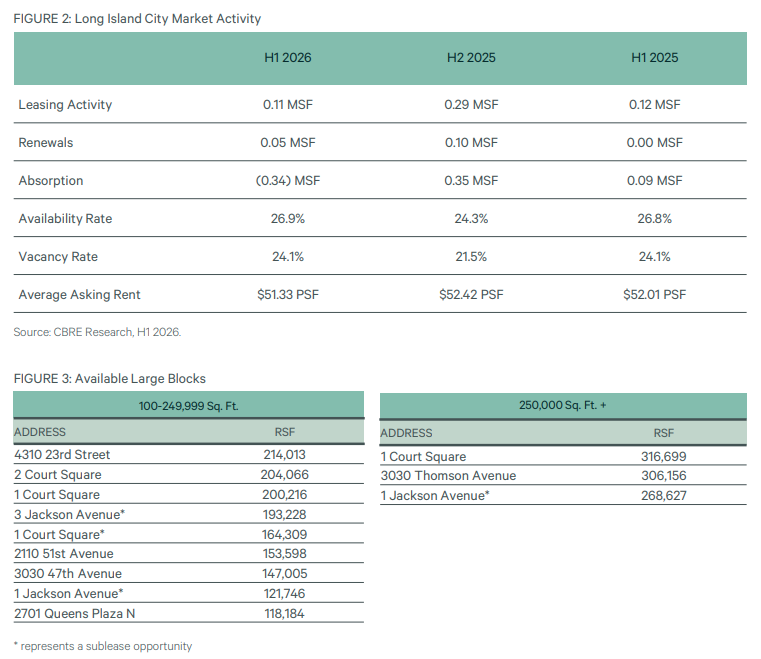
NYC Health will probably sign a long-term renewal in a few years and Gotham Center would have a very solid valuation based on discounted cash flows from an A+ rated tenant. But the city will have many options to choose from. If it does not renew then the value of the building would be impaired because it would require a large investment in upgrades and leasing. And even then might struggle due to lack of LIC demand.
GO will acquire the property even though there’s no synergy with its NYC multifamily portfolio. My guess is that GO recognized the Lantower acquisition would dilute the NYC narrative it has pitched to investors. GO says 70% of its pro-forma rents will still be from NYC, without mentioning that approximately 9% of rents will be from this office building that has significant leasing and valuation risk. Hofstedter cleverly negotiated an option to acquire 50% of the building in 2030 when the fate of the NYC Health lease will be known. Heads - TOM wins, Tails - GO loses.

Disclosures & Notes
At the time of publication the author held units of H&R REIT and no position in units of GO Residential. This disclosure should not be interpreted as a recommendation to make any transaction in any security. Investors are encouraged to check all of the key facts cited here from SEDAR filings and other sources prior to making any investment decisions. The author is not a lawyer and has not yet received any legal advice regarding dissent rights or any other legal aspects of the HR and GO transactions so his descriptions of those topics could be wrong. The author believes all information in the article is accurate as of the date of publication.
A copy of this article was sent to H&R REIT at the time of publication. If the company can identify any factual errors using information that was public at the time of release then corrections will be made as promptly as possible.
I believe this article serves the public interest so it has been published with no paywall. Please share with anybody who might be interested.
“it's a golden day we can force them to step down”
They’re from New York City 👊
Well said ! These guys had a hidden agenda from the start ! Then using the Blackrock association as a smoke screen and CIBC playing both sides on this one!! I hope this is a wake up call to the securities commission that this ponsi needs to be investigated. All this money spent and its looking like this was the play from the very beginning and probably anyother interested parties were discouraged from participating because this crocked deal was already in the oven! Looks like all the best assets were dividedd up by the principle parties and the rest was transfered to the common shareholders that have been offered a token cash payment and .56 of a roll of toilet paper GO stock that by the way has only gone down since this deal was made public!! I only see one winner in this deal at the cost of all the rest of the shareholders !! Blatant conflict of interest so obvious? What were they thinking ?
Alexander Hofstedter is listed as a director on Eric Weiss' charity:
https://www.charitydata.ca/charity/eric-weiss-family-charitable-foundation/759529910RR0001/
Is that Hofstedter's boy? I only know about Zev Mandelbaum...
Another insider who is not an insider??