

Breaking: Slate Grocery REIT Enters into Definitive Agreement to be Acquired by Brixmor and Everview Partners in a US$2.3 Billion Transaction for US$13.00 per Unit in Cash (LINK)
I am pleased that I signaled an opportunity in Koneko research subscriber chat on Thursday and Friday. It’s disappointing that we did not have more time to execute.
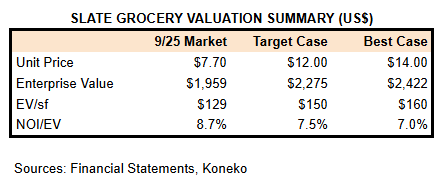
The deal falls between the US$12 Target Case and US$14 Best Case I was about to publish. It looks fair to me. This article is now largely irrelevant, but I just finished writing it so here you go …
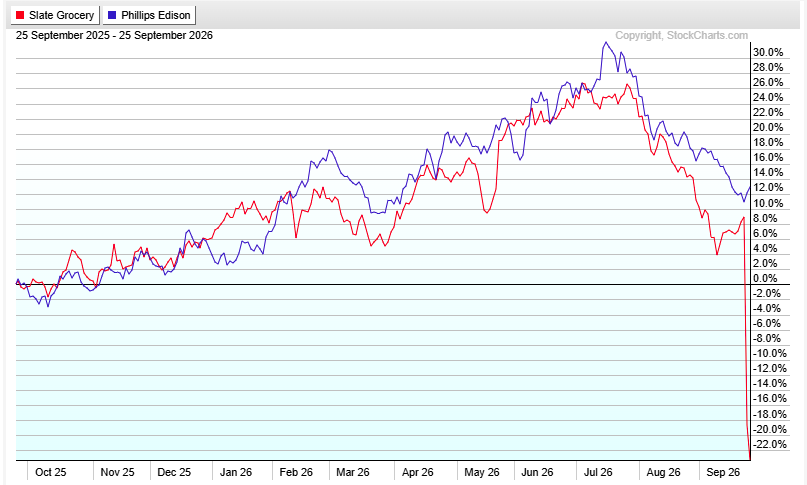
Slate Grocery REIT (TSX:SGR.U and TSX:SGR.UN) units are -32% since beginning a strategic review in May 2026. They fell sharply last week after distributions were suspended “to enhance the REIT’s financial and strategic flexibility”.
Investor disappointment may be due in part to a misunderstanding of the impetus for the strategic review. SGR announced establishment of a special committee “in response to an unsolicited proposal received from affiliates of Slate Asset Management". It was widely assumed that the proposal was a buyout offer, but the announcement carefully avoided any specific detail about the nature of the “proposal”. Management declined to comment in the conference call. That leads me to believe the SAM proposal was not an acquisition, but some other transaction in its own interest such as sale of assets to SGR.
“The Special Committee has a broad mandate to consider and evaluate a broad range of strategic alternatives, including, but not limited to, a sale of the REIT. At this point, the Special Committee has determined to initiate a formal process to solicit proposals from third parties.”
SGR is following the proper process and sale to a third party is the most likely outcome. Suspension of the distribution maximizes flexibility by retaining capital to facilitate refinancing of near-term debt and possibly fund payments to SAM if they would be required for some of the strategic options under review.
Topics:
Grocery anchored retail has gained favor among institutional investors
Slate Grocery History
Slate Grocery Portfolio
Slate Asset Management - growing in some markets while others are under distress
Valuation Comparable public market market values and transaction metrics. A target price for an SGR acquisition.
Grocery Anchored Retail
The segment has gained favor among investors:
Resilient pandemic performance
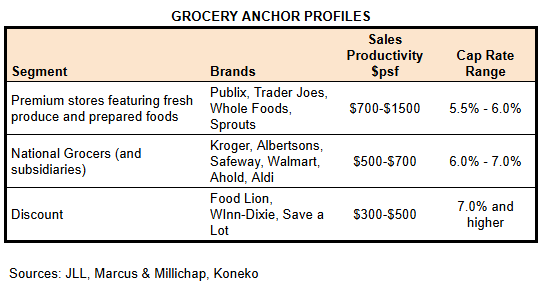
Industry consolidation. National acquisition of regional chains retains local market knowledge and brand value while improving supply chain efficiency. For landlords, the tenants become more productive and backed by stronger credits. For example, Harris teeter is owned by Kroger, Tom Thumb by Albertsons, and Giant Food by Ahold.
Below market in place rents. Occupancy cost for tenants has fallen because inflation boosted retail sales much more than the escalators in long-term leases.
Anchor tenancy is a strong indicator of real estate value.
Slate Grocery History
2014 Slate Retail REIT listed following the combination of 3 private Slate funds. The initial portfolio comprised 29 grocery-anchored properties with 3.5mm sf. The REIT had an initial NAVPU of US$12.08 with its investment properties valued at a weighted average cap rate of 7.0%.
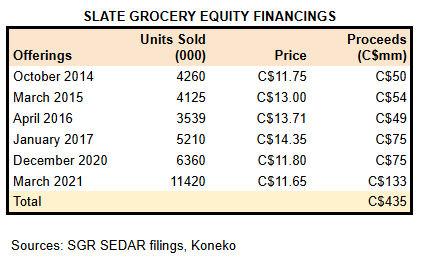
The external management contract incentivized growth in AUM. SGR employed high leverage, paid high distributions, conducted 6 equity offerings, and acquired 86 properties from 2015-2025.
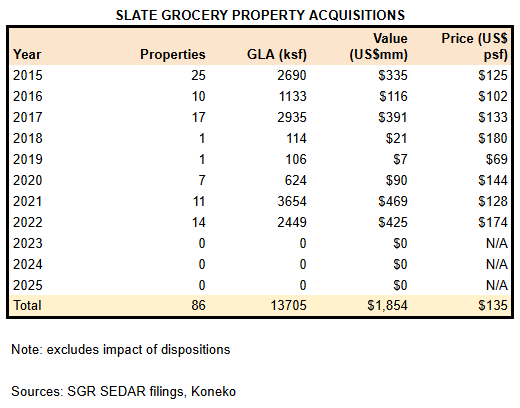
In 2022 SGR formed a JV partnership with Slate North American Essential Real Estate Income Fund (SNARF). SNARF acquired an 18.4% interest in a portfolio of SGR assets for US$180mm. SGR invested the proceeds in acquisition of US$425mm of additional properties. The SNARF equity appears on SGR financial statements as a “Non-Controlling interest”. A Special Committee of SGR independent trustees concluded the transaction terms were fair to the REIT’s investors. The Special Committee currently evaluating “an unsolicited proposal received from affiliates of Slate Asset Management” is comprised of largely the same individuals.
Portfolio Profile
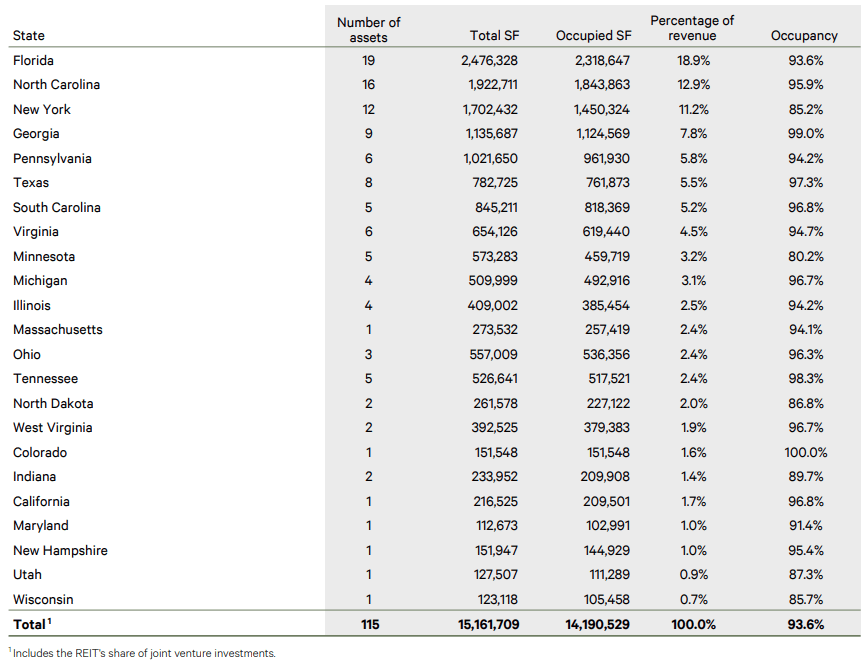
SGR’s investor presentation and MD&A provide helpful details about its diverse national portfolio.
Sunbelt states account for 57% of GLA. Only 1 of 155 properties had an anchor tenant vacancy (East Little Creek in Norfolk VA which is being marketed by Colliers).
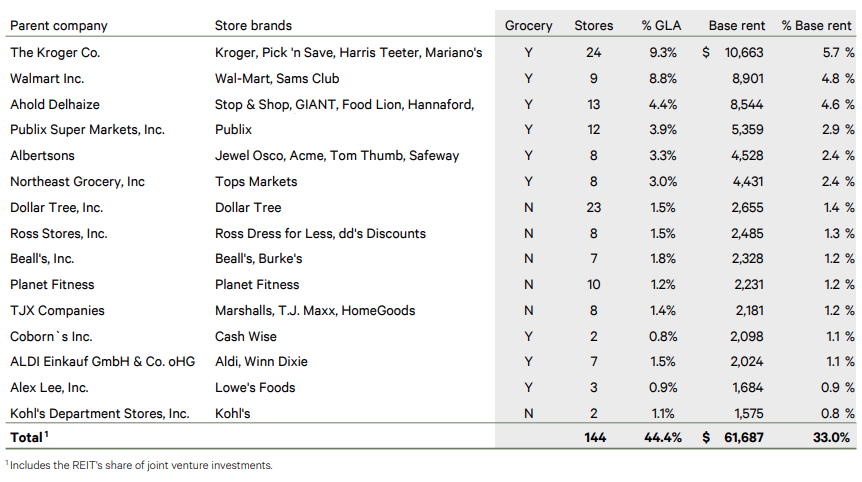
Leading tenants are strong brands and strong credits.
Slate Asset Management
Financial stress could be a hidden motivation for SAM’s “proposal” to SGR.
Slate Office REIT had $1.8Bn of assets and $0.7Bn of equity at 12/31/22. High leverage and a mediocre portfolio of secondary market properties resulted in the entire equity being acquired in 2026 for only nominal consideration by Clarke Inc.
Slate Canadian Real Estate Opportunity Fund lost most of its Western Canada property assets through defaults and court-supervised receivership sales. George Armoyan’s Armco bought Stephen Avenue Place in Calgary in receivership. Another 7 properties were sold to various buyers. The Metrotown Place office complex in BC went into receivership in 2024 and was acquired by the local government.
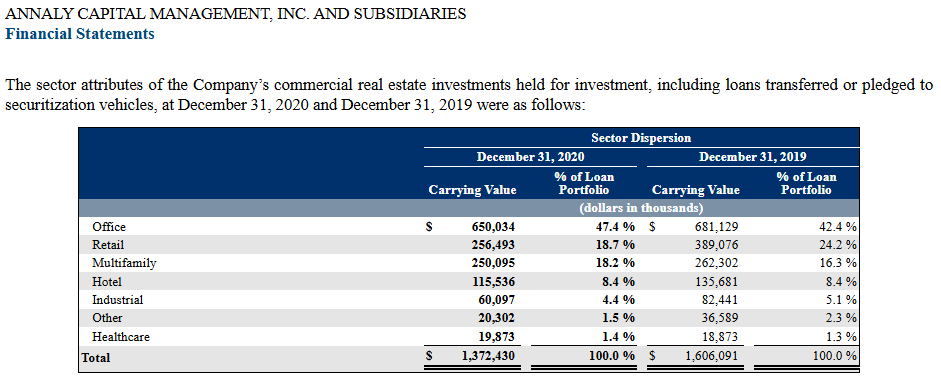
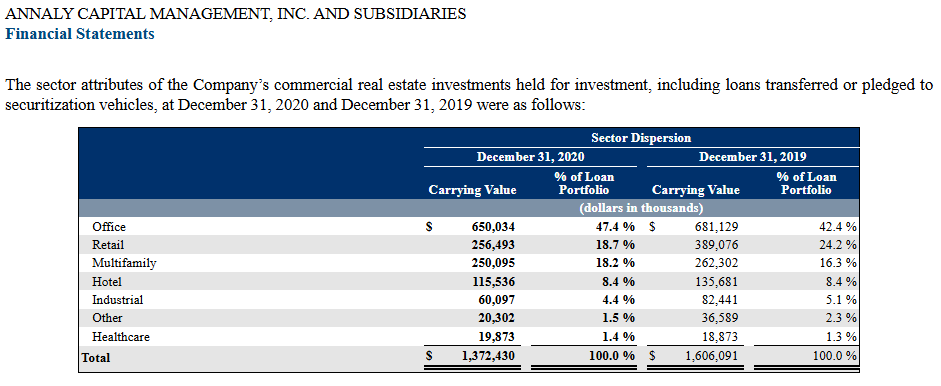
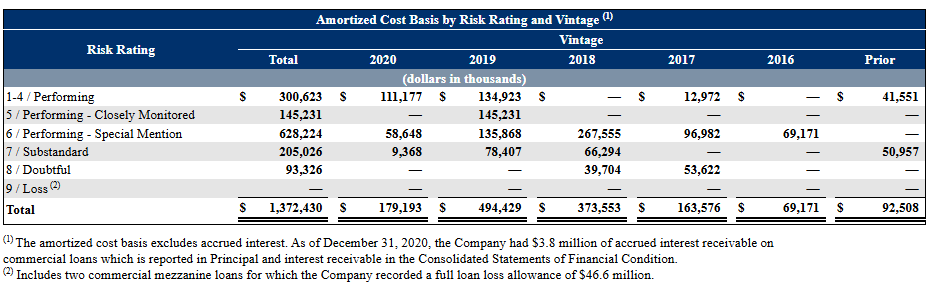
Slate acquired a a US$2.33Bn portfolio in 2021 from Annaly Approximately $0.4Bn of that was grocery anchored centers acquired by SGR. I believe the commercial loans shown below were the majority of the balance and the high Office sector exposure probably resulted in large subsequent impairments.
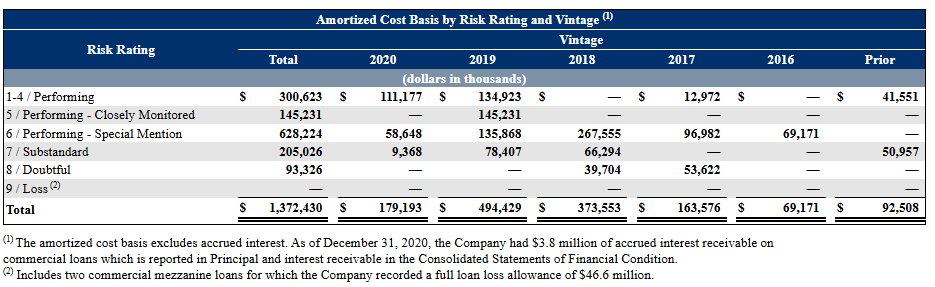
Annaly already showed a majority on a watchlist-type rating as of 12/31/20. Commercial mortgage REITs have reported poor performance since then. SAM could easily have incurred $200mm of impairments on these assets.
Amidst these difficulties, some Slate entities were still aggressively acquiring assets in 2025:
€300mm portfolio of Polish retail parks (JV with Ares)
€100mm “essential real estate” portfolio in Germany. Mentions ytd total of €800mm of essential property acquisitions.
Undisclosed value of 9 cold storage facilities in US (JV with Hamilton Lane)
Slate has not disclosed any acquisitions in 2026. Slate Office was still buying assets in 2021 and 2022 and then drove right off a cliff. My guess is that SAM is more interested in recovering capital from SGR than acquiring it. Options could include:
Sale of SAM assets to SGR. Possibly from SNARF or from a European fund.
Acquisition of new assets by SGR in a partnership similar to the 2021 arrangement with SNARF.
Internalization of SGR through buyout of the management contract. SGR has not been able to grow AUM in recent years.
Repurchase of SGR units held by SAM
Repurchase of the SNARF partnership interest
Sale of the SGR management contract and SGR units held by SAM to a new third party manager
Sale of SGR to a third party acquiror
H&R and Artis strategic reviews in recent years resulted in unexpected outcomes favoring insiders over public investors. The “proposal” from SAM to SGR might be something similar.
Slate Grocery Governance
SAM’s economic interest in SGR:
Direct ownership of 3.36mm units (5.7% of outstanding)
Annual management fee of 0.4% of SGR’s gross book value. Termination of the contract would trigger a payment equal to management fees paid in the preceding 12 months ($9.5mm as of 2Q26). There are no change of control payments due.
Joint venture investment by SNARF with a book value of US$180mm
Investor base is widely diverse with no 10% holder.
SGR has Class A and Class I units in addition to the publicly traded Class U units. The A and I are convertible to U and essentially equivalent, with equal voting power, and no preferential treatment in any potential corporate action. Special Voting units are authorized, but none are outstanding.
The independent trustees appear well qualified, although none has a meaningful equity interest.
Valuation & Investment Perspective
New Trade Idea - Slate Grocery REIT (SGR.UN) Buy under C$11. The unit price drop following the distribution suspension creates an extremely attractive potential return with limited downside risk. I posted in Koneko subscriber chat on 9/24 that I was “buying a bit under C$11” and then on 9/25 posted that I was adding with the price down to C$9.50. I think the most likely outcome is a third party acquisition within 6 months at a unit price of at least US$12 (C$17).
Distribution suspension makes it more difficult for the Special Committee to consider any strategic alternatives, such as acquisition of new assets, that might involve equity issuance. I suggested that SAM’s proposal could have involved such actions, but SGR does not have the financial capacity to execute them. Sale to third party could provide these benefits to SAM:
Redemption of the US$180mm JV investment
Proceeds of US$40mm (at $12/unit) from sale of SGR units
Termination fee of $9.5mm.
Peer Valuation
Phillips Edison (PECO) is a US listed REIT with a grocery anchored portfolio and the most logical buyer of SGR. PECO has a much stronger balance sheet and a slightly stronger portfolio. See the latest PECO presentation for additional background.
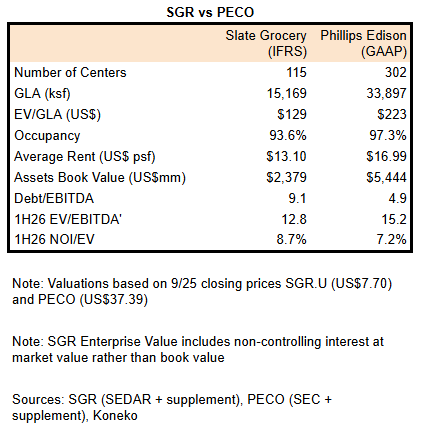
Share price performance was closely correlated until the SGR distribution suspension.
Due to SGR’s somewhat weaker portfolio, I applied an NOI/EV valuation of 7.5% in my Target Case.
Portfolio Sales
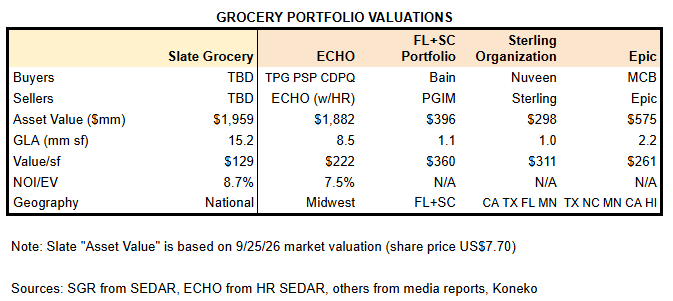
Institutional interest in grocery anchored retail has grown. A few large portfolio sales in the past year provide valuation benchmarks. Limited information about ECHO was disclosed via H&R REIT due to its equity-accounted 33.1% interest. The other sales were between private buyers and sellers.
Portfolio Detail
I sorted the entire SGR portfolio by anchor:
13% of GLA is premium tenants (Publix and Fresh Market)
52% of GLA is national grocers, and investment grade credits (Krogers, Albertsons, Ahold, Walmart)
25% of GLA is value brands (Food Lion, Tops, Winn Dixie)
The mix is a little bit weaker than PECO and the institutional portfolio sales. The Giant Eagle stores that anchor the ECHO portfolio are comparable to national chains, but they are in low-no growth Midwest markets. My SGR Target Case NOI/EV of 7.5% is equal to ECHO due to overall weaker tenant mix, but stronger geography.
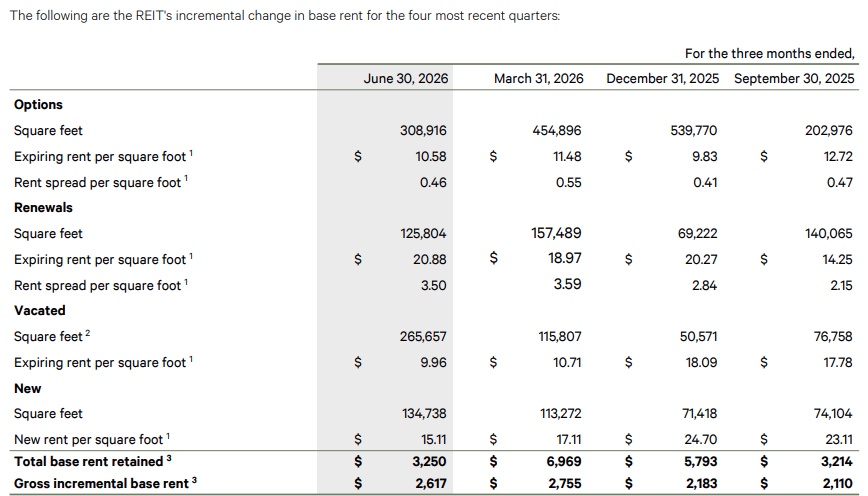
SGR highlights the gap between in-place rent of $13.10/sf and market rents. This will provide strong support to cash flows and asset values over time. However, anchor tenants typically have one or more 10-year extension options on set terms so those leases take a long time to reach market levels. In the past 4 quarters renewals and new leases were at an average rent of $20.28/sf, however exercised options were at an average rent of only $11.34/sf. The weighted average rent of $14.65 from options, renewals, and new leases drove same property NOI growth of +1.9% in 2Q26.
Balance Sheet & Distributions
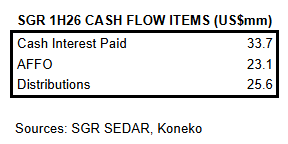
SGR’s elevated leverage, including $382mm maturing in 2027, will pressure cash flow. The AFFO payout ratio was already 113% in 2Q26. The interest rate spread on the revolver resets based on SGR’s debt/GBV. Suspending the distribution will conserve $51mm/year in cash flow, facilitate refinancing, and prevent spreads from widening.
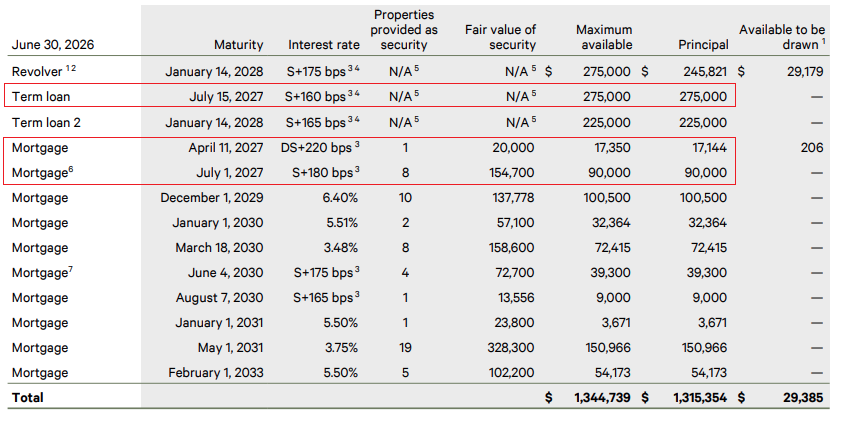
If SGR’s cost of debt rose by 100bp then interest expense would increase by about $13mm/year, or $6.7mm for half a year. That would reduce AFFO to about $16mm. At a sustainable 75% payout ratio the distribution would be US$0.53/year.
Disclosures and Notes
At the time of publication the author held units of Slate Grocery. This disclosure should not be interpreted as a recommendation to purchase any securities. These holdings vary greatly in size and could change at any time. Investors are encouraged to check all of the key facts cited here from SEDAR, SEC filings and other sources prior to making any investment decisions. The author believes all information in the article is accurate as of the date of publication. Any factual errors in the article will be corrected as promptly as possible.
Big congrats to Koneko and everyone else who landed this big win! Very nice to see a REIT be sold and it benefit all unitholders.